
As the year comes to an end, healthcare organizations are at a very important point in their history. It’s not just about closing the books in Q4. It’s also about fixing problems, making processes stronger, and laying the groundwork for a better financial year next year. During this time, Revenue Cycle Management (RCM), which is often called the financial heartbeat of healthcare, needs to be given special attention.
The problems you had all year—higher denial rates, delays from payers, staffing shortages, changes in rules, and trouble getting patients to pay—don’t just go away in Q4. In fact, a lot of them get worse. The good news is that Q4 is also the best time to make targeted process improvements that will have an immediate effect and set your company up for long-term success.
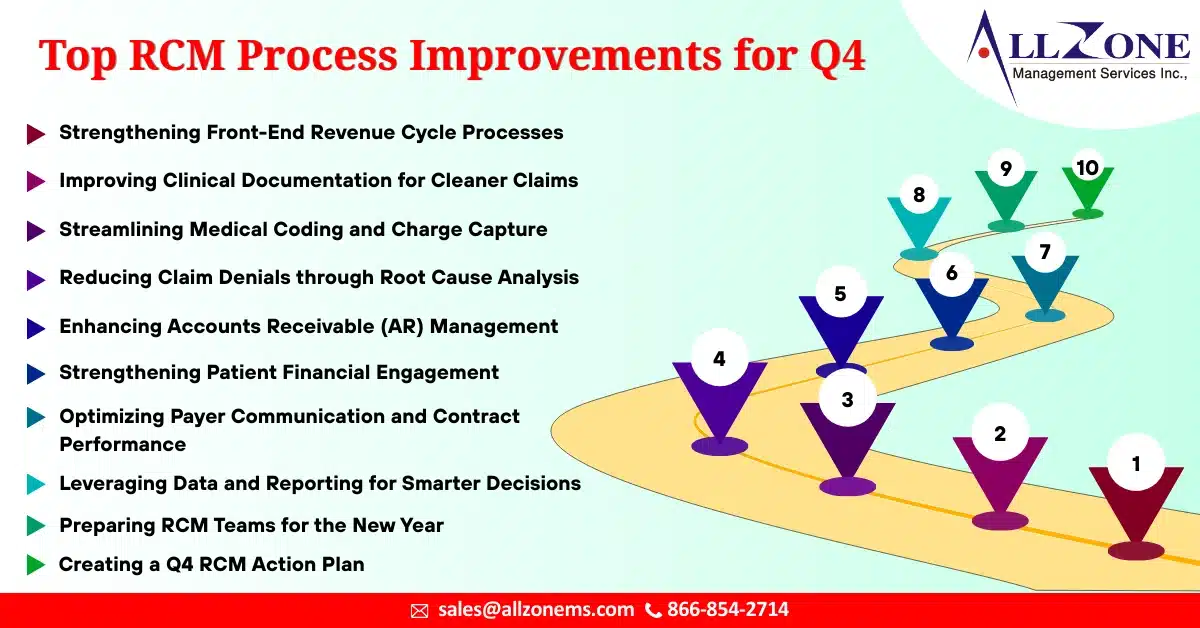
This newsletter talks about the best RCM process improvements for the fourth quarter. It focuses on practical, people-centered strategies that find a balance between making operations more efficient and keeping patients happy. These changes can help you end the year on a high note and start the next year with confidence, no matter how big or small your healthcare organization.
Why Q4 Is the Most Critical Time for RCM Optimization
Before diving into specific improvements, it’s important to understand why Q4 matters so much in the RCM lifecycle.
- Year-End Financial Pressure: Organizations aim to meet revenue targets, reduce aged AR, and minimize write-offs before closing the fiscal year.
- Insurance Deductible Resets: Patients often have remaining deductibles to meet, increasing collection opportunities—but also requiring clearer communication.
- Staff Fatigue: Teams are often stretched thin, making streamlined workflows essential.
- Regulatory Preparation: Changes scheduled for the New Year require readiness in coding, billing, and compliance.
- Data Availability: Q4 offers a full year’s worth of data to identify trends and fix root causes.
With these realities in mind, let’s explore the most impactful RCM process improvements to prioritize in Q4.
1. Strengthening Front-End Revenue Cycle Processes
The revenue cycle doesn’t start with claims—it starts at the front desk. Many revenue leaks originate long before a service is delivered, making front-end optimization one of the highest-impact Q4 initiatives.
Key Focus Areas:
- Patient Registration Accuracy
- Insurance Eligibility Verification
- Authorization and Referral Management
Why It Matters
Even small registration errors—misspelled names, incorrect policy numbers, outdated insurance—can result in claim denials, delays, and unnecessary rework.
Q4 Improvement Actions
- Conduct a registration accuracy audit using random patient records.
- Reinforce standardized intake workflows for both in-person and virtual visits.
- Ensure real-time insurance verification is completed before every encounter, especially for returning patients with potential plan changes.
- Review authorization workflows for high-cost or high-volume procedures.
Human Impact:
A smoother front-end process reduces patient frustration, eliminates surprise bills, and helps staff feel more confident in their work.
2. Improving Clinical Documentation for Cleaner Claims
Clinical documentation is the bridge between patient care and reimbursement. In Q4, improving documentation accuracy can drastically reduce denials and rework.
Common Documentation Challenges
- Missing or vague diagnoses
- Incomplete procedure details
- Lack of medical necessity support
- Late documentation submissions
Q4 Improvement Actions
- Partner billing and coding teams with clinicians for documentation feedback sessions.
- Identify top denial-related documentation gaps from earlier quarters.
- Encourage timely chart completion through reminders and accountability measures.
- Provide quick-reference documentation tips for frequently billed services.
Human Impact:
Clinicians often want to help but may not fully understand how documentation affects reimbursement. Clear guidance fosters collaboration instead of frustration.
3. Streamlining Medical Coding and Charge Capture
Coding accuracy directly influences cash flow, compliance, and audit risk. Q4 is the ideal time to refine coding workflows before annual updates and regulatory changes take effect.
Key Improvement Areas
- Charge capture delays
- Coding inconsistencies
- Missed or under-coded services
- Compliance risks
Q4 Improvement Actions
- Perform a coding accuracy audit on high-volume and high-revenue services.
- Compare charge capture timelines to identify bottlenecks.
- Standardize charge entry processes across departments.
- Review modifier usage and bundling rules to avoid underpayments.
Human Impact:
Coders and billers feel empowered when they have clarity, consistency, and support—leading to higher accuracy and job satisfaction.
4. Reducing Claim Denials through Root Cause Analysis
Denials are one of the most costly and frustrating aspects of RCM. By Q4, organizations typically have enough denial data to identify patterns and address root causes effectively.
Common Denial Categories
- Eligibility and coverage issues
- Authorization failures
- Coding and documentation errors
- Timely filing lapses
Q4 Improvement Actions
- Categorize denials by type, payer, department, and root cause.
- Focus on the top 5 denial reasons causing the highest revenue loss.
- Implement corrective actions at the source—not just during appeals.
- Track denial prevention metrics, not just denial recovery.
Human Impact:
Reducing preventable denials lowers stress for billing teams and shortens payment cycles, creating a sense of progress and control.
5. Enhancing Accounts Receivable (AR) Management
A bloated AR is often a symptom of deeper workflow issues. Q4 is the time to clean house and improve AR performance before the year closes.
Key Metrics to Watch
- Days in AR
- AR aging buckets (30, 60, 90+ days)
- High-dollar unpaid claims
- Payer response times
Q4 Improvement Actions
- Prioritize follow-up on high-value and aging claims.
- Segment AR worklists by payer, claim type, and age.
- Escalate recurring payer delays through formal channels.
- Review timely filing limits to prevent avoidable write-offs.
Human Impact:
Clear AR priorities reduce overwhelm and help teams focus on work that truly moves the needle.
6. Strengthening Patient Financial Engagement
Patient responsibility continues to grow, making patient collections a vital component of RCM—especially in Q4 when deductibles may be partially met.
Common Challenges
- Lack of cost transparency
- Confusing statements
- Delayed patient billing
- Low payment plan enrollment
Q4 Improvement Actions
- Offer clear cost estimates before services whenever possible.
- Simplify patient statements and billing language.
- Encourage point-of-service collections with empathy and clarity.
- Promote flexible payment options for outstanding balances.
Human Impact:
Patients are more likely to pay when they feel informed, respected, and supported—not pressured.
7. Optimizing Payer Communication and Contract Performance
Not all revenue challenges are internal. Payer behavior plays a major role in reimbursement timelines and accuracy.
Q4 Improvement Actions
- Review payer performance data for delays, denials, and underpayments.
- Identify contract compliance issues and escalate appropriately.
- Ensure fee schedules are loaded correctly in billing systems.
- Document recurring payer issues to support future contract negotiations.
Human Impact:
Billing teams feel validated when payer challenges are acknowledged and addressed at an organizational level.
8. Leveraging Data and Reporting for Smarter Decisions
Data is only valuable if it’s used effectively. Q4 is the perfect time to turn reporting insights into action.
Key Reports to Review
- Denial trends by month
- AR aging by payer
- Clean claim rate
- First-pass resolution rate
- Net collection ratio
Q4 Improvement Actions
- Hold monthly RCM review meetings to discuss trends.
- Share insights across departments—not just within billing.
- Set realistic improvement goals based on data, not assumptions.
Human Impact:
Transparency builds trust and aligns teams around shared objectives.
9. Preparing RCM Teams for the New Year
Process improvements are only sustainable when teams are prepared, supported, and engaged.
Q4 Improvement Actions
- Identify training needs based on errors and rework trends.
- Update internal SOPs and workflows.
- Cross-train staff to improve coverage and flexibility.
- Recognize team achievements and improvements from the year.
Human Impact:
Acknowledging effort and progress boosts morale and retention—especially during year-end fatigue.
10. Creating a Q4 RCM Action Plan
The most successful organizations don’t try to fix everything at once. Instead, they focus on targeted, high-impact improvements.
You’re Q4 RCM Checklist
- Audit front-end processes
- Review documentation and coding accuracy
- Analyze denial trends
- Clean up aged AR
- Improve patient payment workflows
- Strengthen payer accountability
- Use data to guide decisions
- Prepare teams for the next year
Ending the Year Strong Starts with Intentional Action
Q4 is more than just a closing chapter—it’s a turning point. The improvements you make now can reduce revenue leakage, strengthen compliance, and improve both patient and staff experiences. More importantly, they set the tone for how confidently your organization enters the New Year.
Revenue Cycle Management is not just about numbers; it’s about people—patients seeking clarity, staff striving for efficiency, and organizations working to deliver care sustainably. By focusing on meaningful, human-centered RCM process improvements in Q4, you’re not just improving performance—you’re building resilience.