
The American Medical Association (AMA) and nearly 100 other organizations are backing legislation that aims to force payers to comply with independent dispute resolution (IDR) payment determination rules. This unified action comes amid ongoing reports from providers about nonpayment, delayed payment, and improper billing practices by payers. Healthcare providers are now asking lawmakers to put […]
Nuclear medicine is a critical subspecialty of radiology, leveraging small amounts of radioactive material (radiotracers) to diagnose, monitor, or treat a variety of diseases. It offers unique diagnostic information that often cannot be obtained using other imaging modalities. For healthcare providers, understanding the correct Current Procedural Terminology (CPT) codes is essential for accurate documentation, compliant […]
The CPT license to use CPT codes is required for accessing the CPT code set, which is developed and maintained by the AMA as the standard medical language for reporting procedures and services in the US. This system is used by both public and private health insurance programs. CPT codes are also used for administrative […]
End to end RCM (Revenue Cycle Management) encompasses every step in the healthcare payment process, from patient registration to final reimbursement. By adopting a comprehensive RCM approach, healthcare organizations can improve cash flow, minimize errors, and ensure compliance with ever-changing regulations. This blog will explore the components, benefits, and best practices for implementing an end […]
In the evolving landscape of healthcare billing and coding, the shift towards value-based care has placed a new emphasis on the broader factors influencing patient health. One of the most significant developments is the growing recognition of ICD-10 Z Codes—diagnostic codes that capture social determinants of health (SDOH). While these codes have historically been overlooked in […]
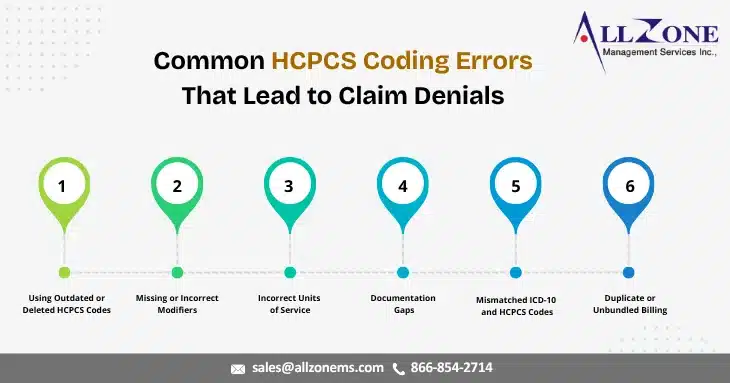
Healthcare organizations rely heavily on accurate coding to ensure timely reimbursement. While CPT and ICD-10 codes often receive most of the attention, HCPCS Level II codes play an equally critical role in billing for supplies, medications, durable medical equipment (DME), ambulance services, and other non-physician services. Even small HCPCS mistakes can trigger claim rejections, payment […]
Dermatology practices handle a wide range of services every day—from routine skin exams and biopsies to complex surgical excisions and cosmetic procedures. While clinical care may appear straightforward, dermatology medical billing can quickly become complicated due to bundled services, lesion counting rules, modifier requirements, and payer-specific edits. Even small coding errors often lead to claim […]
In 2026, claim denials are no longer viewed as an unavoidable part of healthcare operations—they are increasingly seen as a preventable revenue leak. As margins tighten, payer scrutiny intensifies, and patient expectations rise, healthcare organizations are under more pressure than ever to get billing right the first time. Yet, despite advancements in technology and data […]
In today’s complex healthcare billing environment, patients are increasingly paying out-of-pocket for medical services and later seeking reimbursement from their insurance plans. This shift has made the Direct Member Reimbursement (DMR) form an essential component of the revenue cycle for both patients and healthcare providers. A Direct Member Reimbursement form allows insured members to request […]
The Healthcare Common Procedure Coding System (HCPCS) Level II plays a critical role in reporting supplies, non-physician services, and durable medical equipment not captured by CPT® codes. Among these alphanumeric codes, HCPCS Level II D codes are specifically designed to represent dental procedures and services. While primarily associated with dental billing, D codes are increasingly […]