
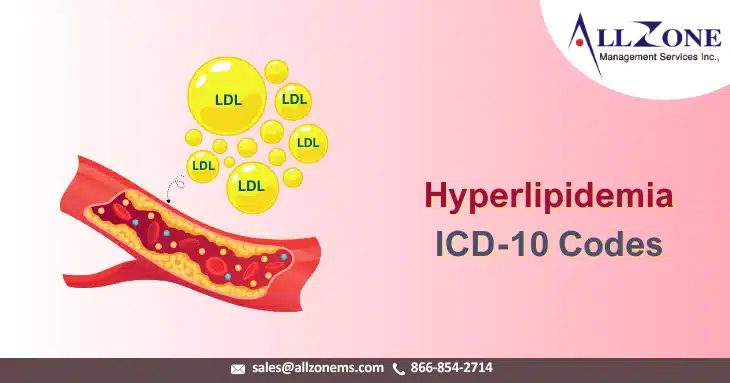
Hyperlipidemia is one of the most commonly diagnosed chronic conditions in clinical practice, significantly increasing the risk of cardiovascular disease, stroke, and metabolic disorders. With the rising prevalence of lipid disorders, accurate ICD-10 coding for hyperlipidemia has become essential for proper documentation, reimbursement, and compliance. Even minor coding errors can lead to claim denials, underpayment, or audit risks.
This comprehensive guide explains hyperlipidemia ICD 10 codes, their classifications, documentation requirements, and best practices for healthcare providers and medical billing teams. At Allzone Management Services, we help practices streamline diagnosis coding, reduce errors, and maximize reimbursement through expert medical coding solutions.
What Is Hyperlipidemia?
Hyperlipidemia refers to abnormally elevated levels of lipids (fats) in the blood, including cholesterol and triglycerides. It is often asymptomatic but plays a major role in atherosclerosis and cardiovascular disease. Hyperlipidemia may be primary (genetic) or secondary, resulting from lifestyle factors, diabetes, obesity, hypothyroidism, or medication use.
Because treatment decisions and payer reimbursement rely heavily on diagnosis specificity, selecting the correct ICD-10-CM code for hyperlipidemia is critical.
Overview of Hyperlipidemia ICD 10 Codes
In ICD-10-CM, hyperlipidemia codes fall under the E78 category – Disorders of lipoprotein metabolism and other lipidemias. These codes allow providers to report specific lipid abnormalities rather than using nonspecific diagnoses.
ICD-10 Category:
E78 – Disorders of lipoprotein metabolism and other lipidemias
Commonly Used Hyperlipidemia ICD 10 Codes
E78.0 – Pure Hypercholesterolemia
This code is used when the patient has elevated cholesterol levels without elevated triglycerides.
Clinical scenarios include:
-
- High LDL cholesterol
- Familial hypercholesterolemia (if unspecified)
- Isolated cholesterol elevation
E78.1 – Pure Hyperglyceridemia
Used when triglycerides are elevated without abnormal cholesterol levels.
Common causes:
-
- Diabetes
- Obesity
- Alcohol use
- Certain medications
E78.2 – Mixed Hyperlipidemia
One of the most frequently used codes, E78.2 applies when both cholesterol and triglycerides are elevated.
Often associated with:
-
- Metabolic syndrome
- Cardiovascular risk factors
- Combined dyslipidemia
E78.3 – Hyperchylomicronemia
A rare lipid disorder characterized by elevated chylomicrons, often genetic in nature.
E78.4 – Other Hyperlipidemia
Used when the lipid disorder does not clearly fall into standard categories.
E78.5 – Hyperlipidemia, Unspecified
This is a less preferred code and should be used only when documentation lacks specificity.
Payer Tip: Many insurance companies scrutinize unspecified codes like E78.5, which may increase denial risk.
Importance of Specific ICD-10 Coding for Hyperlipidemia
Accurate hyperlipidemia coding supports:
-
- Proper risk adjustment
- Medical necessity for lab testing
- Coverage for lipid-lowering medications
- Compliance with payer and CMS guidelines
- Reduced audit exposure
Value-based care models and chronic care management programs increasingly rely on precise diagnosis coding, making specificity more important than ever.
Documentation Best Practices for Hyperlipidemia Coding
To ensure accurate code selection, clinical documentation should clearly include:
-
- Type of lipid abnormality (cholesterol, triglycerides, or both)
- Severity and chronicity
- Associated conditions (diabetes, hypertension, obesity)
- Treatment plan (statins, lifestyle changes, monitoring)
- Family history when relevant
When providers document “hyperlipidemia” without further detail, coders are often forced to use E78.5, which may negatively impact reimbursement.
Hyperlipidemia Coding and Medical Necessity
Hyperlipidemia ICD 10 codes play a critical role in supporting:
-
- Lipid panel testing
- Cardiac risk assessment
- Statin and non-statin therapy coverage
- Preventive care services
Incomplete or incorrect coding may result in denied lab claims or rejected prescriptions, especially for Medicare and Medicare Advantage plans.
Common Hyperlipidemia Coding Errors to Avoid
Medical billing teams should watch for:
-
- Overuse of unspecified code E78.5
- Mismatch between lab results and diagnosis code
- Failure to update codes when lipid patterns change
- Missing linkage between hyperlipidemia and comorbidities
- Inadequate provider documentation
At Allzone Management Services, our certified coders conduct detailed chart reviews to eliminate these common pitfalls.
How Allzone Supports Accurate Hyperlipidemia Coding
Allzone Management Services provides end-to-end medical coding and revenue cycle management solutions, helping healthcare organizations improve accuracy and compliance.
Our services include:
-
- ICD-10 diagnosis coding audits
- Provider documentation improvement
- Denial prevention strategies
- Risk adjustment support
- Specialty-specific coding expertise
By outsourcing medical coding to Allzone, providers can focus on patient care while ensuring precise ICD-10 coding for chronic conditions like hyperlipidemia.
Future of Hyperlipidemia Coding in Value-Based Care
As healthcare shifts toward value-based reimbursement, hyperlipidemia coding will continue to impact:
-
- Quality reporting
- HCC risk adjustment
- Preventive care metrics
- Population health management
Accurate ICD-10 coding is no longer just an administrative task—it’s a strategic component of financial sustainability.
Conclusion
Understanding and applying the correct hyperlipidemia ICD 10 codes is essential for accurate billing, regulatory compliance, and optimal reimbursement. From E78.0 (pure hypercholesterolemia) to E78.2 (mixed hyperlipidemia), specificity matters. Avoiding unspecified codes and improving documentation can significantly reduce denials and audits.
With expert support from Allzone Management Services, healthcare providers can ensure coding accuracy, strengthen revenue cycle performance, and stay compliant in an increasingly complex billing environment.