
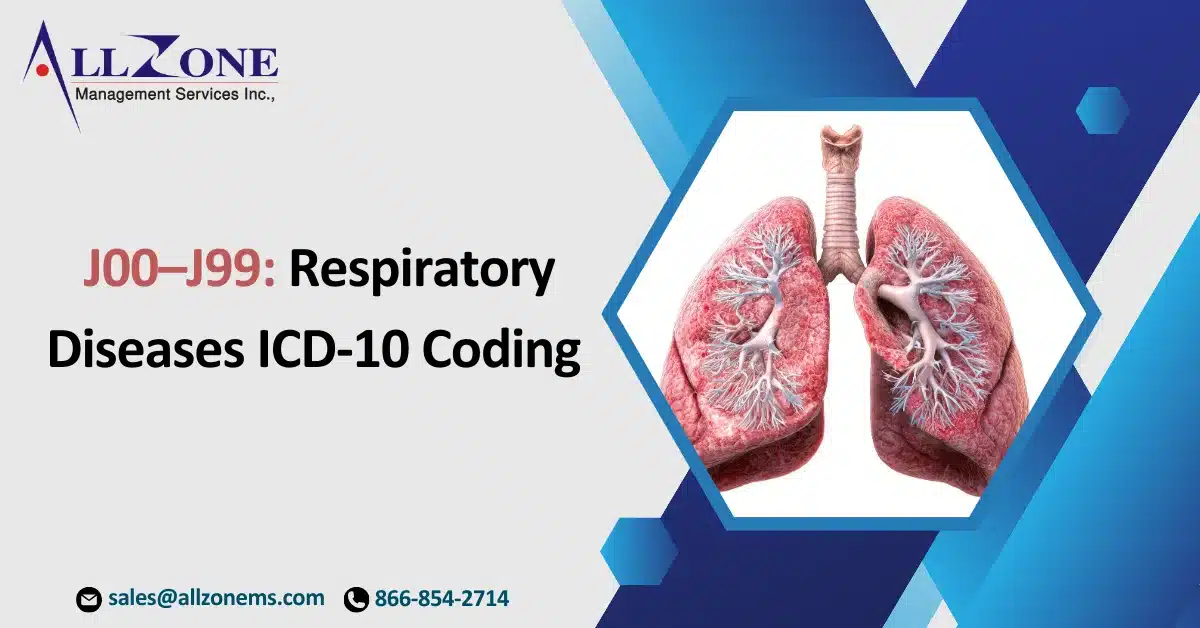
Respiratory diseases remain one of the most frequently reported conditions in clinical settings, ranging from mild upper respiratory infections to life-threatening respiratory failure. In medical billing and coding, accurate classification of these conditions is critical for proper reimbursement, compliance, and clinical reporting.
The ICD-10-CM Chapter J00–J99 covers Diseases of the Respiratory System, providing standardized codes used by healthcare providers, medical billers, and payers worldwide. Errors in respiratory coding can lead to claim denials, underpayments, and compliance risks—making expertise in this code set essential.
In this blog, Allzone provides a detailed overview of J00–J99 respiratory disease codes, with a focused discussion on commonly reported diagnoses:
-
- J00 – Acute Nasopharyngitis (Common Cold)
- J45 – Asthma
- J96 – Respiratory Failure
Overview of ICD-10-CM Chapter J00–J99: Diseases of the Respiratory System
The J00–J99 code range includes conditions affecting the upper and lower respiratory tract, lungs, pleura, and related structures. These codes are widely used across primary care, pulmonology, emergency medicine, and inpatient hospital settings.
Key Categories Within J00–J99:
-
- J00–J06: Acute upper respiratory infections
- J09–J18: Influenza and pneumonia
- J20–J22: Acute lower respiratory infections
- J30–J39: Other diseases of the upper respiratory tract
- J40–J47: Chronic lower respiratory diseases
- J60–J70: Lung diseases due to external agents
- J80–J84: Other respiratory conditions
- J96: Respiratory failure
Accurate code selection depends on provider documentation, disease acuity, chronicity, and associated complications.
J00 – Acute Nasopharyngitis (Common Cold)
Clinical Overview
Acute nasopharyngitis, commonly known as the common cold, is a viral upper respiratory infection characterized by nasal congestion, sore throat, sneezing, and mild fever. While often self-limiting, it is one of the most frequently coded diagnoses in outpatient and primary care settings.
Coding Guidelines for J00
-
- ICD-10 Code: J00
- Used for acute, viral upper respiratory infections
- Do not use J00 when symptoms are part of a more specific diagnosis (e.g., sinusitis or influenza)
Common Coding Pitfalls
-
- Using J00 when documentation supports acute sinusitis (J01) or pharyngitis (J02)
- Reporting J00 alongside confirmed influenza or pneumonia
Billing Impact
Although reimbursement for J00-related visits may be modest, high claim volume means even minor coding errors can significantly impact overall revenue.
Allzone’s medical coding experts help providers ensure accurate diagnosis capture while avoiding upcoding or improper code selection.
J45 – Asthma
Clinical Overview
Asthma is a chronic inflammatory disease of the airways that causes wheezing, shortness of breath, chest tightness, and coughing. It affects both pediatric and adult populations and often requires long-term management.
ICD-10 Asthma Coding Structure
ICD-10 provides detailed classifications under J45 based on:
-
- Type of asthma
- Severity
- Status asthmaticus or acute exacerbation
Common Asthma Codes:
-
- J45.20 – Mild intermittent asthma, uncomplicated
- J45.30 – Mild persistent asthma
- J45.40 – Moderate persistent asthma
- J45.50 – Severe persistent asthma
Documentation Requirements
To code asthma correctly, provider documentation must clearly specify:
-
- Asthma type and severity
- Whether the condition is uncomplicated, with acute exacerbation, or status asthmaticus
Coding Challenges
-
- Missing severity details leading to unspecified codes
- Failure to update codes as asthma severity changes
- Inconsistent documentation between visits
With Allzone’s specialized respiratory coding services, providers can improve coding specificity, reduce denials, and optimize reimbursement for asthma management services.
J96 – Respiratory Failure
Clinical Overview
Respiratory failure is a serious, often life-threatening condition in which the lungs cannot adequately exchange oxygen or carbon dioxide. It is commonly treated in emergency departments and inpatient settings.
ICD-10 Coding for Respiratory Failure
-
- J96.00 – Acute respiratory failure, unspecified
- J96.01 – Acute respiratory failure with hypoxia
- J96.02 – Acute respiratory failure with hypercapnia
- J96.10–J96.12 – Chronic respiratory failure variants
Acute vs. Chronic Respiratory Failure
Correct coding depends on whether the condition is:
-
- Acute
- Chronic
- Acute on chronic
Provider documentation must clearly identify:
-
- Blood gas values (hypoxia/hypercapnia)
- Clinical indicators (use of mechanical ventilation, BiPAP, CPAP)
- Underlying causes
Financial and Compliance Importance
Respiratory failure codes often act as major complications or comorbidities (MCCs) in inpatient DRG assignment, significantly impacting hospital reimbursement.
Allzone’s inpatient coding specialists ensure compliant documentation review and accurate MCC capture to protect revenue and minimize audit risk.
Why Accurate Respiratory Coding Matters
Incorrect coding within the J00–J99 range can result in:
-
- Claim denials and payment delays
- Downcoded claims
- Compliance and audit exposure
- Lost revenue opportunities
Given the complexity of respiratory conditions, providers need coding partners with deep clinical and regulatory expertise.
How Allzone Supports Respiratory Disease Coding & Billing
At Allzone, we deliver end-to-end medical coding and revenue cycle management services tailored to respiratory care specialties.
Our Services Include:
-
- ICD-10 respiratory coding audits
- Asthma and chronic pulmonary disease coding support
- Inpatient respiratory failure DRG optimization
- Documentation improvement and CDI support
- Denial management and compliance review
By combining experienced coders, technology-driven workflows, and payer-specific expertise, Allzone helps healthcare organizations improve accuracy, compliance, and financial performance.
Final Thoughts
The ICD-10 J00–J99 respiratory disease codes play a critical role in modern healthcare documentation and reimbursement. From common conditions like acute nasopharyngitis (J00) and asthma (J45) to complex, high-risk diagnoses such as respiratory failure (J96), precision in coding is non-negotiable.
Partnering with a trusted medical coding company like Allzone ensures your respiratory claims are coded accurately, reimbursed appropriately, and fully compliant—allowing providers to focus on what matters most: patient care.