
Accurate ICD-10-CM coding is essential for documenting diagnoses, supporting medical necessity, processing claims, and maintaining compliant healthcare records. Gallstones, medically known as cholelithiasis, are coded within the K80 category of ICD-10-CM. However, K80 is a category rather than a single billable code. The appropriate code depends on the location of the calculus and whether the […]
Chronic back pain is not just a lingering discomfort—it’s a complex medical issue that requires precise diagnosis, accurate coding, and up-to-date knowledge for effective treatment and insurance reimbursement. Whether you’re a patient, provider, or biller, understanding ICD-10 codes for chronic back pain is crucial. This guide answers the most common questions, provides a full code […]
Types of Medical Coding Audits Explained In today’s healthcare world, medical coding is at the heart of accurate billing, compliance, and quality patient care. Every diagnosis, treatment, and procedure must be assigned a specific code so providers can get paid and meet legal requirements. But how can you be sure those codes are correct? That’s […]
Every leader responsible for the revenue cycle is acutely aware that denial rates have been rising across the healthcare industry. This trend is partly driven by the use of AI-based systems by payers, as well as the increasing intricacy of CMS guidelines. Additionally, most revenue cycle professionals recognize that AI coding tools have been developed […]
In today’s healthcare landscape, ensuring every dollar earned is actually collected is more important than ever. Rising patient deductibles, increasingly stringent payer requirements, and persistent staffing shortages all threaten the financial stability of medical practices. While these challenges may seem out of your control, many of the most common sources of lost revenue, often referred […]
Medical billing is fraught with challenges, and claim denials are among the most common hurdles faced by healthcare providers and billing companies. One particular denial code that often causes confusion is the N130 denial code. Understanding what the N130 denial code means, why it occurs, and how to resolve it efficiently is essential to maintain […]
Medical coding and billing accuracy are critical components of a successful healthcare revenue cycle. Even small coding errors can lead to claim denials, delayed reimbursements, compliance risks, and revenue loss for healthcare providers. With increasing regulatory requirements and complex payer rules, maintaining accuracy in medical coding and billing has become more challenging than ever. Healthcare […]
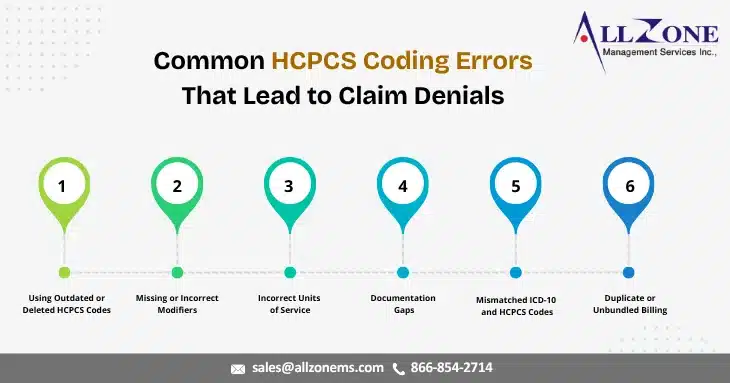
Healthcare organizations rely heavily on accurate coding to ensure timely reimbursement. While CPT and ICD-10 codes often receive most of the attention, HCPCS Level II codes play an equally critical role in billing for supplies, medications, durable medical equipment (DME), ambulance services, and other non-physician services. Even small HCPCS mistakes can trigger claim rejections, payment […]
N30 is a common claim denial remark code indicating that the patient identification information submitted on a healthcare claim is missing, incomplete, or invalid. This includes errors related to member IDs, subscriber numbers, Medicare Beneficiary Identifiers (MBIs), Medicaid IDs, or dependent suffixes. Although N30 denials are administrative in nature, they can significantly disrupt the revenue […]
Key Takeaways CPT Modifier 99 signals that multiple modifiers apply to a single service. Always list Modifier 99 first, followed by others in documentation. Use it only when two or more modifiers are needed to accurately describe the procedure. Check payer rules before applying Modifier 99—some systems allow multiple modifiers without it. Partnering with experts […]