Maternal healthcare services require some of the most precise and sensitive medical documentation in the healthcare system. From the first prenatal visit to delivery and postpartum recovery, every stage involves detailed clinical reporting and strict compliance with payer guidelines. This is where ICD O00–O9A: Pregnancy, Childbirth & Puerperium codes play a critical role. Accurate coding […]
Introduction Accurate ICD-10 ear disorder coding is essential for healthcare providers, ENT specialists, pediatric clinics, and revenue cycle teams that depend on clean claims and timely reimbursements. Ear-related infections and inflammatory conditions are among the most frequently diagnosed problems in outpatient and specialty practices. Without precise coding, even routine ear infection claims can result in […]
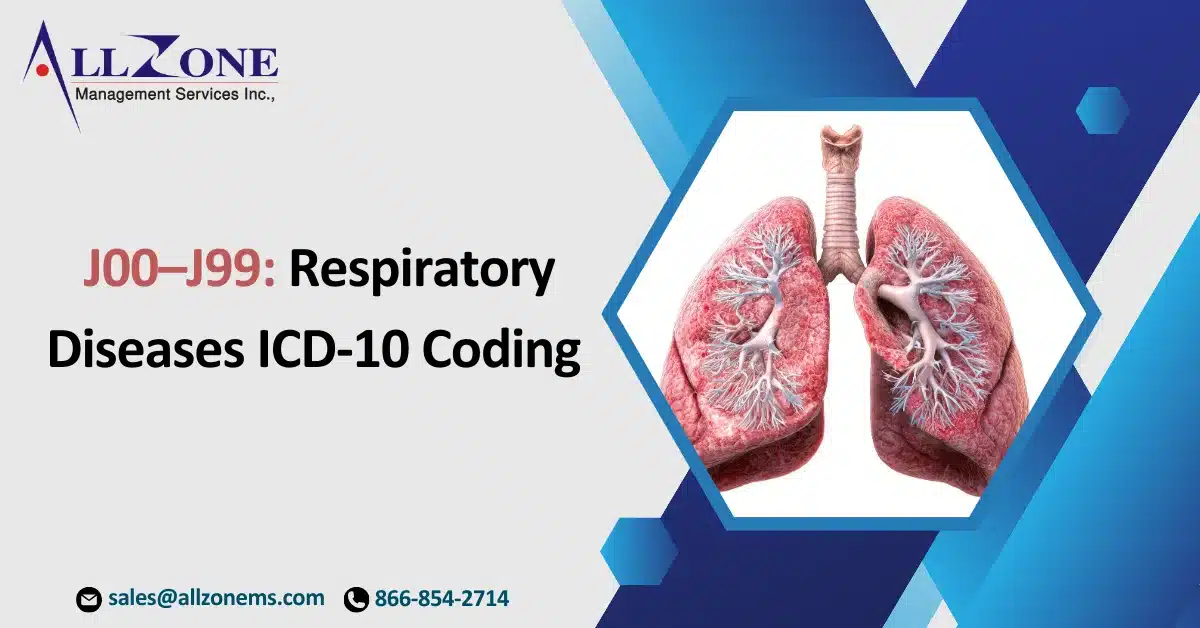
Respiratory diseases remain one of the most frequently reported conditions in clinical settings, ranging from mild upper respiratory infections to life-threatening respiratory failure. In medical billing and coding, accurate classification of these conditions is critical for proper reimbursement, compliance, and clinical reporting. The ICD-10-CM Chapter J00–J99 covers Diseases of the Respiratory System, providing standardized codes […]
Introduction Accurate medical billing is the backbone of healthcare revenue cycle management (RCM). At the core of this process lies medical coding, which converts clinical documentation into standardized codes used for billing, reporting, analytics, and reimbursement. For decades, healthcare systems around the world have relied on the International Classification of Diseases (ICD) to classify diseases, […]
The Centers for Medicare & Medicaid Services (CMS) will introduce 80 new procedure codes to the International Classification of Diseases, Tenth Revision, Procedure Coding System (ICD-10-PCS), effective April 1, 2026. The ICD-10 MS-DRG Grouper continues to assign each inpatient case to an appropriate MS-DRG based on reported diagnosis and procedure codes, along with demographic details […]
Eye and adnexa disorders are among the most frequently reported conditions in ophthalmology, optometry, emergency medicine, and primary care settings. Accurate coding for these conditions is essential not only for clinical documentation but also for timely reimbursements and compliance with payer guidelines. The ICD-10-CM code range H00–H59 is dedicated to Diseases of the Eye and […]
Hyperlipidemia is one of the most commonly diagnosed chronic conditions in clinical practice, significantly increasing the risk of cardiovascular disease, stroke, and metabolic disorders. With the rising prevalence of lipid disorders, accurate ICD-10 coding for hyperlipidemia has become essential for proper documentation, reimbursement, and compliance. Even minor coding errors can lead to claim denials, underpayment, […]
Blood and immune disorders classified under ICD-10-CM codes D50–D89 represent a complex group of conditions that significantly influence patient outcomes, documentation accuracy, and reimbursement in cardiology practices. These disorders frequently coexist with cardiovascular conditions, adding clinical complexity that must be accurately captured in medical records and claims. For cardiology providers, precise coding of blood and […]
Anemia is one of the most frequently diagnosed conditions across primary care, specialty practices, and hospital settings. Accurate diagnosis and documentation are critical—not only for patient care but also for compliant medical coding and proper reimbursement. The ICD-10-CM D50–D53 cover various types of nutritional and deficiency-related anemias, making them essential for healthcare providers, coders, and […]
Immune mechanism disorders are a set of conditions that are hard to understand. They happen when the body’s immune system doesn’t work properly. These diseases can lead to serious infections, autoimmune reactions, and issues that impact multiple organs. To make sure patients get the right amount of money, follow the rules, and have better health […]