

Dermatology practices handle a wide range of services every day—from routine skin exams and biopsies to complex surgical excisions and cosmetic procedures. While clinical care may appear straightforward, dermatology medical billing can quickly become complicated due to bundled services, lesion counting rules, modifier requirements, and payer-specific edits. Even small coding errors often lead to claim […]
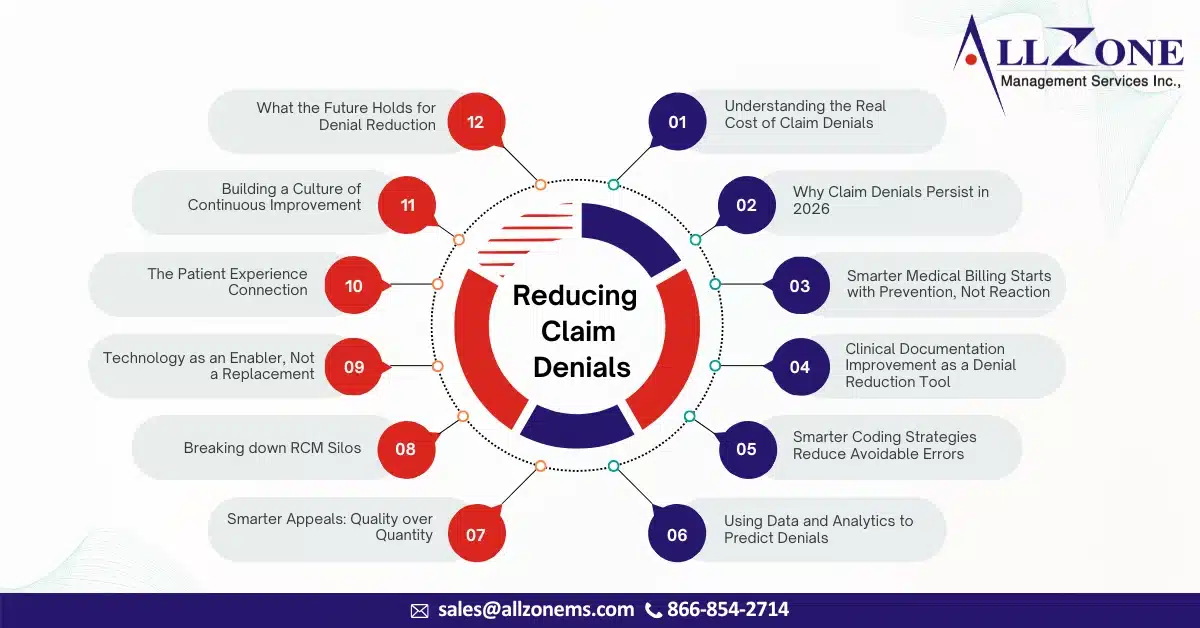
In 2026, claim denials are no longer viewed as an unavoidable part of healthcare operations—they are increasingly seen as a preventable revenue leak. As margins tighten, payer scrutiny intensifies, and patient expectations rise, healthcare organizations are under more pressure than ever to get billing right the first time. Yet, despite advancements in technology and data […]
In today’s complex healthcare billing environment, patients are increasingly paying out-of-pocket for medical services and later seeking reimbursement from their insurance plans. This shift has made the Direct Member Reimbursement (DMR) form an essential component of the revenue cycle for both patients and healthcare providers. A Direct Member Reimbursement form allows insured members to request […]
The Healthcare Common Procedure Coding System (HCPCS) Level II plays a critical role in reporting supplies, non-physician services, and durable medical equipment not captured by CPT® codes. Among these alphanumeric codes, HCPCS Level II D codes are specifically designed to represent dental procedures and services. While primarily associated with dental billing, D codes are increasingly […]
Accurate medical billing begins with one essential step: completing the correct medical billing claim form. These forms are the backbone of the reimbursement process, helping practices capture the full value of the services they provide. Whether you are a healthcare provider or a medical billing company, understanding claim forms—how they work, why they matter, and […]
Introduction In the complex world of healthcare reimbursement, coding accuracy is critical to ensure proper payment and compliance. Among the various code sets used, HCPCS K Codes hold a special place for their role in billing durable medical equipment (DME) and other specific supplies. These codes are often overlooked but play an essential part in […]
In today’s highly regulated healthcare environment, CPT and ICD code compliance isn’t just about accuracy—it’s about protecting your revenue, safeguarding against penalties, and ensuring smooth reimbursements. Healthcare providers and billing teams face increasing pressure to align with payer rules, CMS guidelines, and continuous code updates. A single coding error can result in denied claims, delayed […]
The Healthcare Common Procedure Coding System (HCPCS) is a standardized coding system used primarily for billing and reporting medical services and supplies in the United States. Within HCPCS, C codes are a specific category of temporary codes used under the Hospital Outpatient Prospective Payment System (OPPS). These codes are issued by the Centers for Medicare […]
Introduction In medical billing, modifiers play a vital role in explaining the circumstances under which a service or procedure was performed. One such important modifier is Modifier 76, which helps billers and coders indicate when a repeat procedure or service is performed by the same physician or qualified healthcare professional. Accurate use of Modifier 76 […]
In today’s healthcare ecosystem, precision isn’t just a professional virtue—it’s a financial necessity. Every code, every modifier, every character entered into a medical billing system has the power to either accelerate cash flow or stall it indefinitely. When coding errors creep in, denials multiply, reimbursements are delayed, and the revenue cycle becomes a maze of […]