
ICD-10-CM codes are a cornerstone of modern healthcare documentation, billing, and analytics. Understanding these codes is essential for healthcare professionals across clinical, administrative, and billing roles. This guide will walk you through the basics of ICD-10-CM, why they matter, and how to use them confidently in your daily practice. What Does ICD-10-CM Stand For? ICD: […]
Headaches are among the most common complaints in clinical practice. They affect millions of people worldwide and can range from mild discomfort to debilitating pain. Properly coding headaches is essential for accurate documentation, effective treatment, and correct reimbursement. The ICD-10 code R51.9 specifically applies to headaches that lack further specification. In this article, we’ll explore […]
Effective denials management is crucial for every healthcare provider aiming to maintain financial health and deliver exceptional patient care. Claim denials can disrupt cash flow, increase administrative burdens, and even impact patient satisfaction. By mastering denials management strategies, providers can minimize revenue loss and create a more efficient billing process. Understanding Denials in Healthcare Claim […]
The American Medical Association (AMA) and nearly 100 other organizations are backing legislation that aims to force payers to comply with independent dispute resolution (IDR) payment determination rules. This unified action comes amid ongoing reports from providers about nonpayment, delayed payment, and improper billing practices by payers. Healthcare providers are now asking lawmakers to put […]
In today’s complex healthcare landscape, medical billing errors are an unfortunate reality for many patients. These errors can lead to unwarranted financial stress, confusion, and even impact access to necessary care. Understanding the most common medical billing errors, your rights as a patient, and the steps you can take to resolve these mistakes is crucial for […]
If you ask any experienced revenue cycle manager what truly determines the financial health of a healthcare organization, the answer is rarely coding or charge entry alone. The real difference often lies in one specific operational area — insurance follow-ups. Claims are submitted every day. Payments are expected every day. But revenue is actually realized […]
In essence, the insurance company you billed believes another insurer is primarily responsible for the payment. Understanding and effectively managing CO 22 denial code is critical for maintaining a healthy revenue cycle and ensuring timely reimbursements. This comprehensive guide will break down the CO 22 denial code, explore its common causes, and provide actionable strategies […]
Accounts Receivable (AR) days directly impact cash flow and overall financial health. The longer a claim sits in AR, the more challenging it becomes to collect revenue, leading to cash flow disruptions, operational inefficiencies, and reduced profitability. Therefore, it’s crucial for businesses to actively work to reduce AR days and improve their financial performance. With […]

In the ever-evolving field of medical billing, denied claims remain a significant obstacle for healthcare providers. Studies reveal that over 10% of claims face initial rejection by insurers, leading to revenue losses, administrative strain, and frustration for all stakeholders. To mitigate these challenges and ensure financial stability, an effective denial management process is essential. However, […]
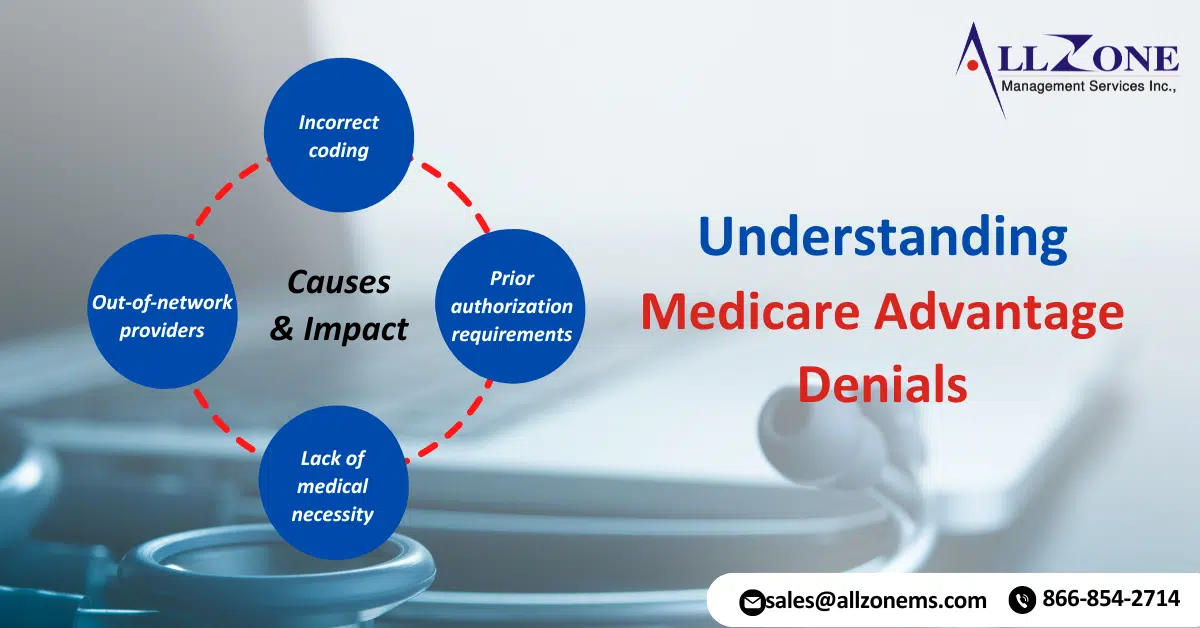
Medicare Advantage (MA) plans, a type of private health insurance, have become increasingly popular among seniors. These plans offer additional benefits beyond traditional Medicare, but they also come with their own set of complexities. One of the most significant issues faced by MA beneficiaries is Medicare Advantage denials for medical services. Recent data has revealed […]